The Importance of Free-Writing
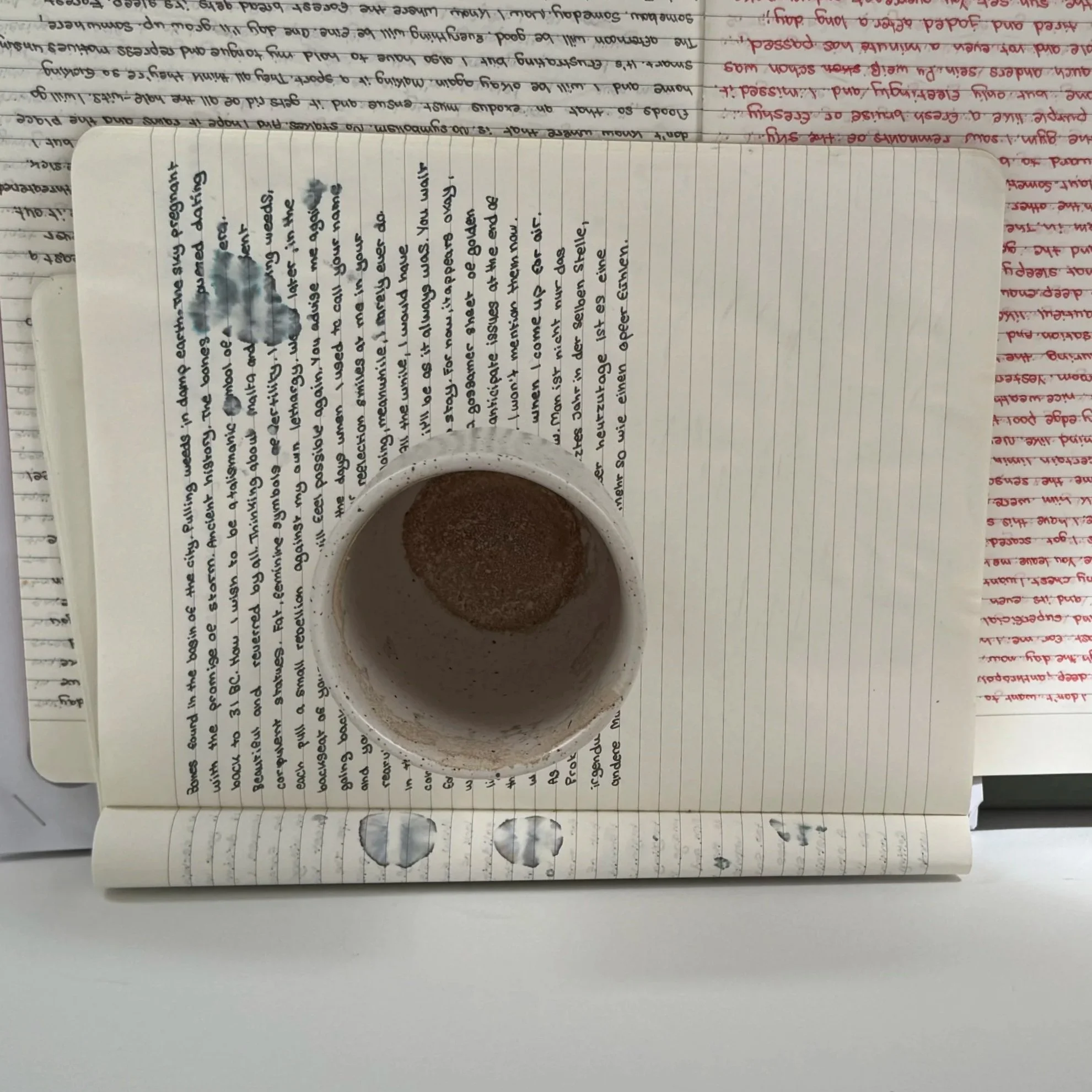
Writing without pause or censor, letting the pen run until your wrist aches and the page is full— this is what I call free-writing.
In its concentrated form, free writing can break patterns of procrastination and help overcome mental blocks; dissolving the stalemate between the fear of beginning and the fear of falling short.
I desperately struggled to write essays in my final year of high school. I would spend hours on a single paragraph, selecting the “right” words and squeezing in every piece of information I deemed necessary. Feeling defeated and restless every time I sat down to study, my mind became a cul-de-sac— seemingly incapable of starting a sentence, let alone finishing one.
One day, after airing out my frustrations at the dinner table, my brother sat me back at my desk that evening and set a timer. In front of three empty double-sided pages, a few primary quotes and my dormant pen, I got writing. When my confrère-invigilator returned an hour later, I had filled the pages with paragraph upon paragraph. To my own disbelieve—and relief—I had written the bones of a half decent essay, and all it took was an hour and an alarm at the end of it.
Feeling jaded and once again restless, I returned to free-writing during university. I longed to write, but I continued to struggle with a need for perfection. This debilitating penchant is something only free-writing helped me confront. While the obsession is still terminal, free-writing gives me the means of simply starting. It’s the remedy that allows me to render something into existence with the possibility of perfecting it later. Ultimately, amidst the illogical pursuit of proving myself to myself, the practice of free-writing is the provision I need to get over myself.
In its creative form, the free-writing approach facilitates the spewing out of new ideas, residing in our subconscious or surroundings. If one is free-writing in public— at a café or on a park bench— it can also stem from observation or eavesdropping. The approach fosters a rhizomatic way of writing where one idea invokes another. While not mandatory, the practice is most effective when performed as a ritual. My most fruitful sessions have been accompanied by fresh coffee in the morning or candlelight in the evening. If you’re able to switch off and depart from the doldrums or demands of the day, free-writing has the potential to expose your innermost subterranean thoughts: the beautiful, the banal and everything in between.
In the spirit of getting over oneself, it should be noted that free-writing isn’t going to supply you with your magnum opus. It may, however, open your mind to what that work might be. The practice doesn’t promise success every time you sit down to write. Free-writing is rewarding if it’s treated as a disciple. Even if you manage only one good sentence, you must appreciate the rest of the page too, because it brought you to that one good sentence. Continuous writing—without grammatical or structural concern and without waiting for inspiration— alleviates the postponement of self-comprehension— enabled by procrastination. Restless, distracted and demotivated as we often find ourselves, the suspension of self-development and understanding strikes us like a pang of guilt in our unfulfilled potential.
I’m still critical of myself, and with good reason. I tend to be overly flowery in my language, to repeat the same thing twice in my essays and to use sentences longer than even the likes of Proust would allow. These are shortcomings I’ve yet to resolve. But in the meantime, I can find hope and a quiet confidence in the fact that my best writing has been pulled from my battered moleskin journals; the archival home of my free-writing records. Without the pressure to produce something socially acceptable, substantial, or of literary merit, you may end up surprising yourself.
At the end of it all, this is the most important part of free-writing. You must write until you surprise yourself. Don’t think, let the hand write for you and the head will intercept when you least except it to.