Behind the Rhizome: Language on Holiday Anthology
Rhizome (noun): A continuously growing horizontal underground stem which puts out lateral shoots and adventitious roots at intervals.
It was Autumn and the agency I was interning at overlooked a construction site. The construction site was in the big, ugly shadow of a building which combined Bauhaus with brutalism, making for an eyesore which must have been erected sometime in the early 80s. It was approaching November and Cologne was often cold and rainy. I wore an oversized coat to work with cheap purple stitching on the inside. I would soon realise this stitching stains any light coloured sweaters I wear underneath. The office I worked in had a wall of column oil heaters beneath a window that never received any sun.
During my internship in Germany there were days when no projects came in and the corporate environment caused a knot to tie deep in the core of my stomach. On such days, I would have to engage in other blue-light immersive activities. I would often log into the Paris Review and read anything without a paywall.
The months of October to December should have created a lacuna in my creative aspirations. Instead, I wrote more in this time than I have all of this year. I wrote religiously and with unmitigated zeal. Sometimes I found myself writing so quickly my hand struggled to keep up with my thoughts— my wrist tightening under the pressure of my pen’s attempts to catch up. Achingly conscious of my mind’s ephemeral musings, I began to operate as though under an imaginary time crunch.
Consequently, I began simply listing down words; words which struck me in the moment as interesting or vaguely sentimental. Reading the Paris Review, I penned down words that I liked or wanted to remember for later use. This habit soon leaked into my life outside of my 9 to 5. The notes app on my phone, in particular, functions as a registrar for random words— portioned off into paragraphs; each cluster of seemingly unrelated words denoting a different emotional epoch. Collections of nouns, verbs and the occasional adjective feature just as much on my phone as they do in my moleskin, restaurant serviettes and old receipts.
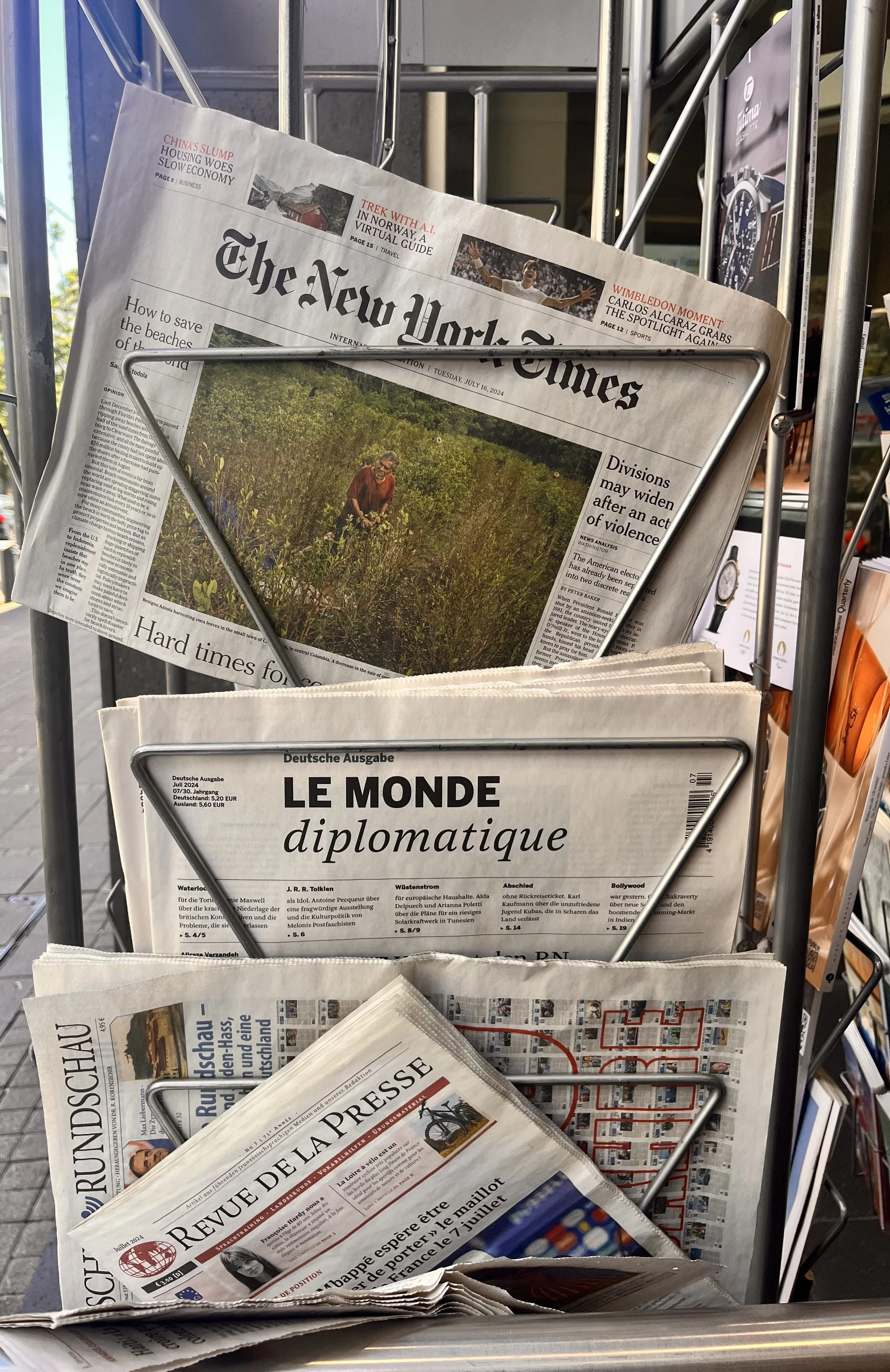
Today, these collections constitute a curious and arcane miscellany which, although they weren’t at the time of collection, are now a mystery to me. All I remember is that I picked up words everywhere; from newspapers and magazines, from text panels in museums and art exhibit statements. I stole and recycled them, placing them in my world with new meaning. One word would inspire another and a rhizome would grow, forming a collection of souvenirs signifying places, times, feelings and ephemeral states of being. I never thought of publishing them as they were— without punctuation, pronouns, proper conjunctions or prepositions. But it felt foreign and disingenuous to force them into some lyric or prosaic structure. Besides, I think there’s value in indulging in a bit of experimentation from time to time. And, in its essence that’s exactly what the ‘Rhizome: Language on Holiday Anthology’ is— a thought experiment. As a result, the inspiration behind my most recent series of poems; Hypnotherapy Blackberry Birch Trees, Midnight Floodlight Spectral Distortions, and Pale Moonlight Menthol Brume Forest Bathing, is deliberately misty and vague.
The prominent Austro-British philosopher Ludwig Wittgenstein pioneered a picture theory of language. His seminal works ‘Tractatus Logico-Philosophicus’ and ‘Philosophical Investigations’ served to illuminate the complicated and intrinsically ambiguous relationship between language and reality. Wittgenstein’s analyses advances what can be understood as a therapeutic approach to the inherent poverty of language. This concept is especially explored within the parameters of logical positivism— a movement driven by conceptual accuracy, mathematical formality and strict empiricism.
Wittgenstein’s linguistic anthropology investigates the communal nature of language and how speech is fundamentally socially generated. Along this same anthropic line of thinking, my collections create a unique ecosystem of words; a network of nomenclature. Forcing the reader to fill in the blanks, my ‘Language on Holiday’ anthology is a simultaneous embrace and rejection of Wittgenstein’s discursive tradition. The rhizomatic collections invite association and dance between the lines of definition and conceptional import. Each poem can be viewed as asking the reader what resonance words hold and what allusive properties they hold in quick succession of one another independent of structure or overarching theme. Tracing the cognitive webs we create in our mind when reading, they question our attachment to certain words and why we impart more weight on some than others.
Within Wittgenstein’s philosophy, the idea of ‘language on holiday’ is complex and more than difficult to unpack. Explication of Wittgenstein’s entire discourse on language is no easy feat and so I won’t endeavor to do so here. However, in order to grasp the notion itself of ‘language on holiday’ one must acquire a brief understanding of Wittgenstein’s picture of language. And it’s easier to apprehend this picture when we place it in competition with the traditional Augustinian view of language.
The ancient Roman-African philosopher and theologian Saint Augustine of Hippo held a fundamentally symbiotic conception of language. In his Confessions, St Augustine highlights the primitive nature of language and its evolution from infancy through to adulthood. Widely amenable to early Western developments of etymology and linguistic anthropology, the view that language is ancestral and inherited from elders is attributed to St Augustine.
Conversely, Wittgenstein’s exposition of language and pragmatic view of linguistic function holds a foundational aversion to Augustine’s view of language. The Austro-British philosopher propagates language as a system or set of social practices whose meaning is directly symptomatic of the specific context from which it emerges. While Augustine prioritized the connection between language and thought, Wittgenstein prioritized the connection between language and reality. The Augustinian view of language posits a referential theory of word usage where apprehension is rooted in ostensive definition and correlative properties of the thing being named. For Wittgenstein, this view is restrictive and unaccommodating of linguistic nuance and complexities.
On the surface, it may seem like Wittgenstein shares common ground with St Augustine. The communal evolution of language and its reflection of human customs and practices appear to be elements apparent in Wittgenstein’s own discourse. While expressing sympathy with the basic premises of the ancient philosopher’s beliefs, Wittgenstein criticizes this referential theory of language for being too myopic.
From here Wittgenstein rejects Augustinian discourse but he does so only to employ his criticism as a basis from which to investigate the impossibility of conceptual reification— emphasising the inherent poverty of language when it comes to communication in philosophical discourse. The puzzlement arising when one neglects to consider the tenebrous complexities and nuances dictating language. Wittgenstein, herein makes the titular claim that “philosophical problems arise when language goes on holiday”. Placing words in a methodological framework and orphaning them of their everyday context, hereby detaching them from the social practices that give them their meaning in the first place, only creates confusion. Wittgenstein maintains that this approach only fosters misinterpretation in philosophy; hindering apprehension and complicating the ontology of the subject being discussed.
Within the confines of philosophical theory and methodology, my framework for this anthology seems far-removed from the discourse Wittgenstein engages in. Nonetheless, I cannot deny the inspiration it instilled in me to leave my collection of words alone. It’s precisely Wittgenstein’s challenging of ostensive definitions and the primitive nature of nomenclature that planted the seed in my mind to explore ‘language on holiday’ within literature.
What I would like to propose in my anthology is an exploration of ‘language on holiday’ in the poetic sense. My anthology aims to explore language without any conclusive context. The poems ask the question of what resonance words hold in a vacuum or in quick succession of one another. The same way Wittgenstein emphasised the social nature of language invention so too poetry should stimulate an adventitious (rhizomatic) invocation of the reader’s sentiment and memory; their own private etymological apprehension of a work.
Ultimately I want to demonstrate that while ‘language on holiday’ can be understood as a serious issue in philosophy it need not be so in the literary sense. My anthology and the rhizomatic thinking from which it grew encourages language on holiday and invites the reader to do so too.