The Remote Mediterranean Escape You Probably Haven’t Heard of
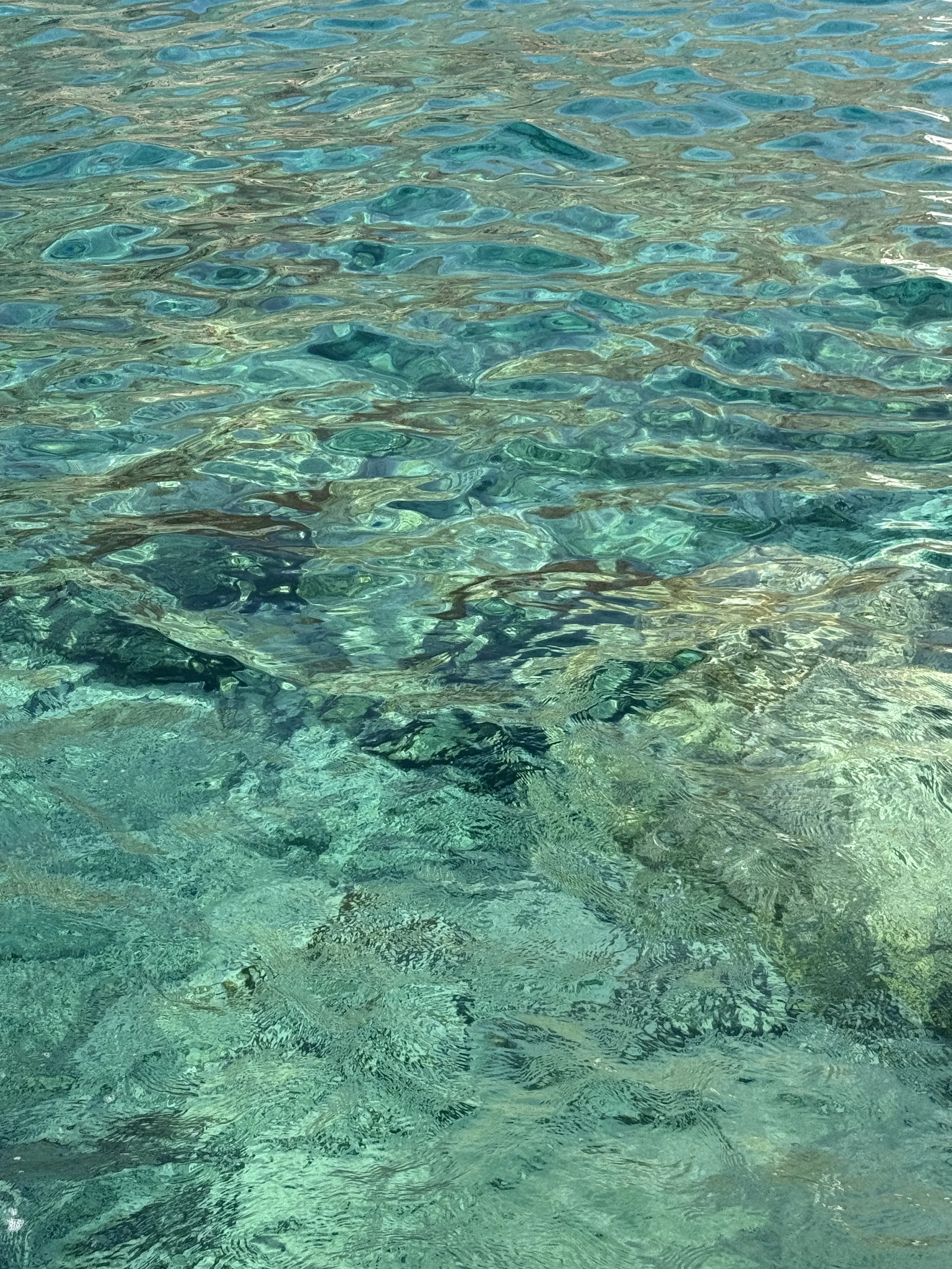
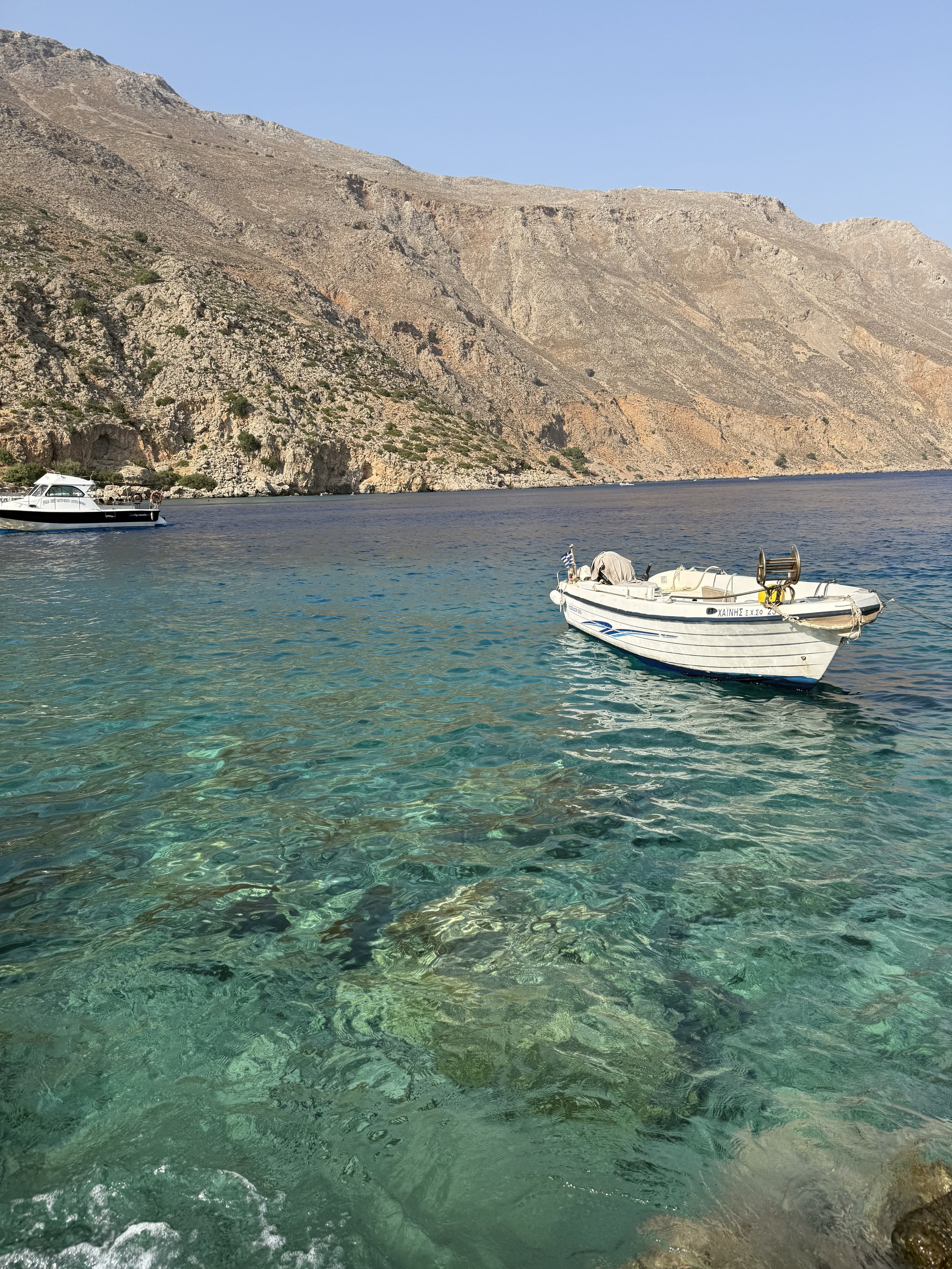
Schools of albescent fish swarm the turquoise shore . Like melted glass, the crystalline current washes against the rocky beach with a splash and dissipating crunch. The stones covering the small bay are white and almost pearlescent under the silver midafternoon sun. My bronzed limbs are lathered in vanilla scented Tahitian oil. I’m sprawled on a five euro sunbed— a pastel yellow umbrella shading my head.
Saving money, not leaving my reserved lounger, except to swim in the sea, lest I lose it. The remote fishing village hosts only a few expensive tavernas. Having splurged on a boutique hotel in Chania, my provisions have dwindeled down to a warm glass of kalamata olives which I scoop out periodically; salty and unpitted. I don’t know how the locals feel about tourists spitting organic waste on their pristine shores. I practice universal propriety and spit the stones into a brown paper bag. I’m reading a book about generational narratives emanating from and during the land reform campaign in communist China. The cover is pink and bleached by the sun. I lose my footing on every new page. I fall asleep. I sweat. I swim far out into the Mediterranean sea until the people are crumbs. The sky is blue and unburdened by clouds. I tell myself I am too. Blue, but at this minute, unburdened by clouds. The melody of Pulp’s song ‘Blue Girls’ plays in my mind ‘blue girls that bake in the sun, skin falls in flakes from each one.’ At the northernmost mound of the jagged mountain trail, a fleecy goat looks down at me. I wonder why he’s alone. I wonder why I’m still alone. Loutro is like stumbling upon a dream and I long to share it with people I love. This has been my problem from the start. I love solo-travelling but I’m occasionally struck with this longing feeling. Sometimes I get sick of experiencing things alone. I swim out further to sea. When I turn around, the goat is gone.
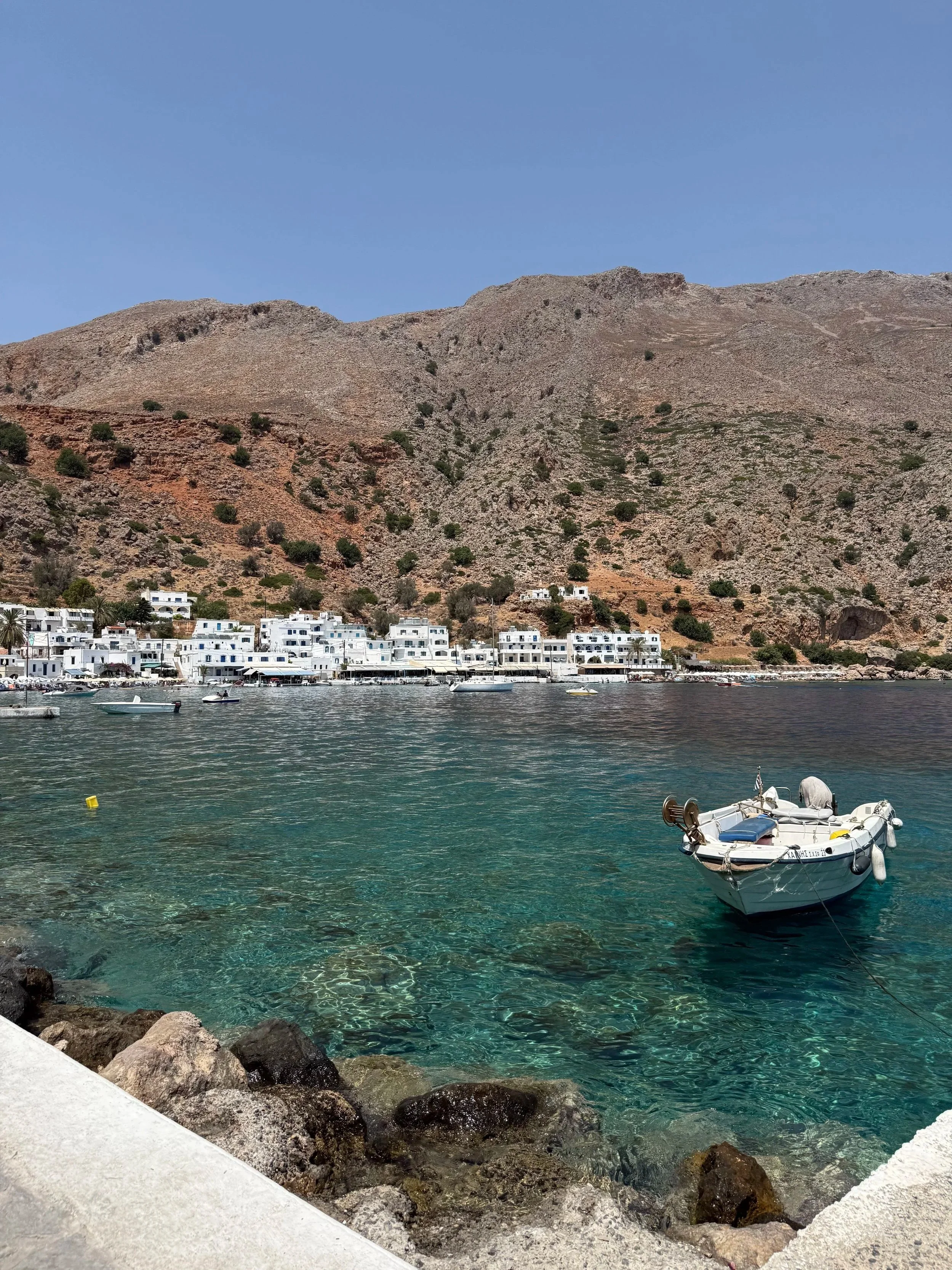
The white village sequestered on Crete’s rugged southwest coast has called my name every summer since. Named after the Greek word for “bath”, Loutro is a quietly dazzling apparition in the otherwise mountainous terrain of the eastern Mediterranean island of Crete. Isolated and largely inaccessible by land, Loutro preserves a sense of Crete that you won’t see emulated anywhere else on the island.
My Cretan holiday was a spontaneous one— squeezed into a temporally unforgiving itinerary of Malta, Denmark, Germany and later Spain. My travel plans rarely ever resulted from anything other than an unfortunate mixture of wanderlust and disorganization. I was staying in the historically rich corner of the expansive Greek island of Crete. The old port city of Chania stayed awake well into the night. The sound of the fountain in the square and children staying up past their usual bedtime. Foreign tongues melting mellifluously into one another under the Aegean sky. You get the impression the Venetian lighthouse and the sandstone stronghold which embrace the bustling harbour are forever sentinel spectators of the summer traffic. With nothing but the Aegean Sea and the famous White Mountains above the town to accompany them, you feel a sense of bittersweetness in the air— an otherworldly exile from the remote past that was once at rule here. The bygone bustle of the Minoan civilization splitting with the sound of the bottle green sea slapping against the chalky environs of the city.
The cobblestoned pavement is slippery from years of people walking on it and polishing its surface. As I make my way back to the hotel, I grip the street with my sneakers and pray for stability and some semblance of grace. I’ve said goodbye to the girls I met just that evening and although it’s late I’m determined to get some quality sleep before I need to catch an early bus that very morning. Through narrow alleyways with burgeoning bougainvillea at every turn, I arrive back at my hotel. My room is facing the harbour. I’ve left the windows open. Diaphanous curtains billow softly with the sea breeze. The ceilings are tall so the heat rises.
I’m packing my beach bag when my phone rings. I talk to my mother. I’m lethargic and still somewhat inebriated. All of a sudden my phone screen goes a static green. No longer receptive to touch and overheating in my hand. I set it down. I begin to stress. I’m now wide awake. With no other means of communication, I worry I won’t be able to contact my family should something go wrong. I then realise all my flight details are on my phone. Even worse, I can’t remember how much money I have left in my international account. In the habit of making occasional transfers rather than lump sum installments, my money could run out at any given point. After at least an hour of worrying and worshiping this inconvenience with no way of appeasing the problem, I manage to fall asleep.
As luck would have it the alarm on my phone still goes off. I have access to the time as my lockscreen appears when I turn it on but the device is otherwise frozen, denying its owner access on account of, what I suspected to be a dying battery or heatstroke. I finally manage to turn the alarm off by the side button. With my prepaid bus-tickets in hand I make my way to the terminal. I tell myself that I’m fortunate my phone died at the end of my holiday. Had it happened any earlier my navigational skills wouldn’t have been strong enough for survival. By now, I had memorised the main streets and I knew how to get to the bus station and back to my hotel without getting lost. What I didn’t know was where I could repair my phone or whether that was even an option. I definitely didn’t have enough money for a new one.
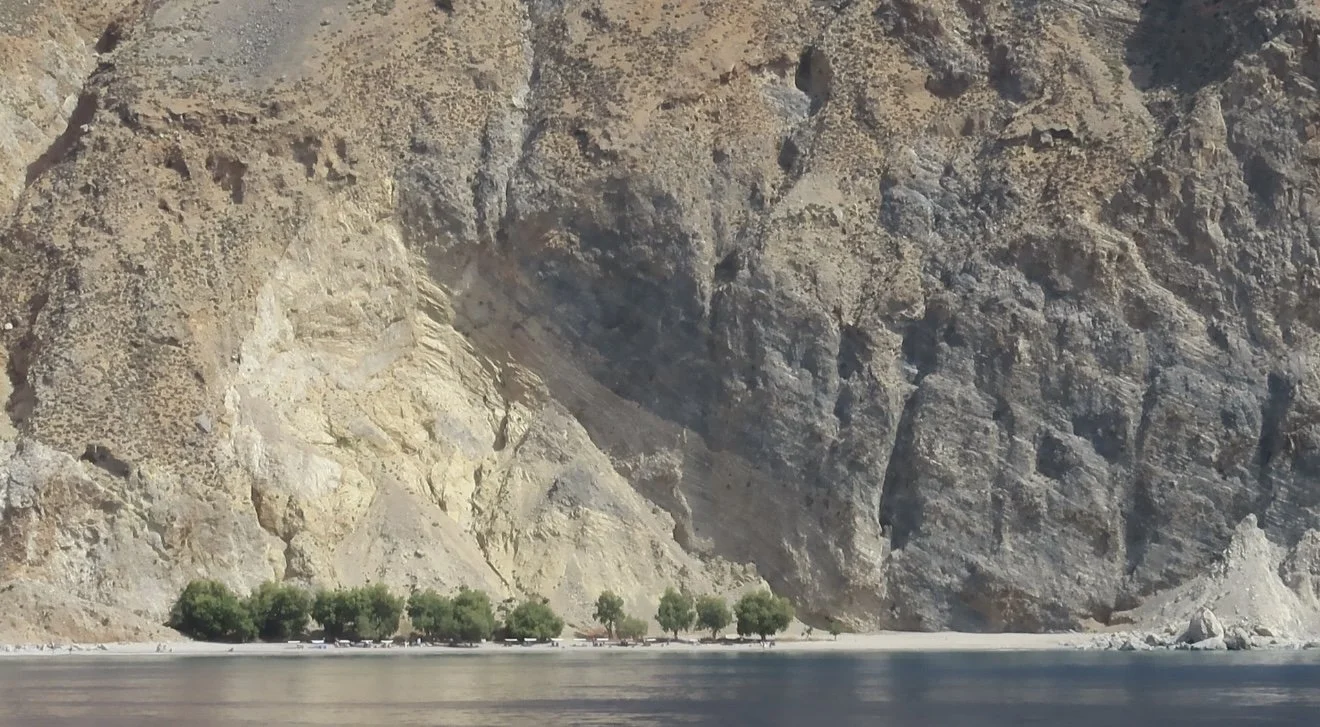
When travelling via bus and ferry, the journey from Chania to Loutro takes approximately two and a half hours. The destination is worth every second. From Chania, the bus takes you to Sfakia where a regularly scheduled ferry takes you to Loutro. With nothing but my book for entertainment and an overwhelming predisposition to motion sickness, I do nothing but stare at the winding road. The ferry ride is far more amusing. Watching the white wash being swallowed and spat back out from under the belly of the boat. Admiring the stark contrast between rugged cliffs and clear blue beaches in the middle of nowhere. One such beach is only accessible by smaller private boats. Sweetwater beach is shortly before Loutro. Although I’ve never been, I’m enamored from afar at this small patch of paradise. With nothing but a unique copse of tamarisk trees, the narrow beach sits at the bottom of the steep white mountains like a relinquished pearl.
Docking in Loutro is like arriving on the set of one’s own private film. I relish the sound of my sandals on hot pavement. Along with the dispatch of tourists like myself, fresh produce is being unloaded from the lower decks. I wander along the tapering promenade and politely decline taverna owners vying for business. Even when wandering casually, it takes less than 3 minutes to traverse the shore. It’s still reasonably early and having arrived on the first ferry for the day, I secure a sunbed easily. The village is a small pocket of Crete untouched by the mass tourism one encounters further north of the island. It’s a welcome change from the crowds of Balos bay or Chania’s own Nea Chora beach.
When I arrive back in Chania I can’t believe my luck when I see a phone repair shop right opposite the bus station exit. I check their opening hours and return first thing the next morning. Putting my own convenience over the cost, I spend more than I probably should at getting it repaired. That same evening I fly back home to Cologne. Sunkissed and in love with Loutro, I watch the coastline disappear into the clouds. I put my earphones in, without so much as a notion that I’ll be back again within a year. This time with more peace of mind and a fully functioning phone. Above the ocean, the aircraft is now being swallowed by clouds. I’m singing in my head again. Fragments left at the end of the day, A pile of blue that is soon swept away, Goodbye blue girls, goodbye.